

Your foundation looks even until you blend cream blush over your cheeks. Suddenly, a patch of redness shows through, and more blending only makes the gap larger.
Cream blush can lift foundation when application disturbs the layer underneath. A base that still moves easily, excessive pressure, repeated blending, and the particular product combination are useful starting points for troubleshooting. Preventing it means checking how the base behaves, applying color with less disturbance, and changing one part of your routine at a time.
1. Is Your Foundation Lifting, or Is Your Blush Just Uneven?
Before changing products, look closely at what has happened. Uneven blush color and missing foundation coverage can look similar from a distance, but they call for different adjustments.
The following observations are a practical way to describe the problem. They do not identify a particular ingredient or prove that a formula is faulty.
| What you notice | What to check next |
|---|---|
| A previously covered area of redness or discoloration becomes visible as you blend | Whether foundation coverage has been disturbed |
| Blush looks darker in some places, while the coverage underneath remains even | How much color you picked up and where you first placed it |
| Small rolls or crumbs appear on the surface | Whether the layers are pilling, rather than simply losing color |
| The application looks even initially, but cheek color fades later | Wear and touch-up needs, rather than immediate foundation lifting |
For example, a concentrated pink spot over an otherwise even base may need its edge softened. A pale gap where foundation has come away needs coverage restored. Continuing to blend both problems in the same way can make it harder to see what originally went wrong.
2. What Makes Cream Blush Disturb the Base Underneath?
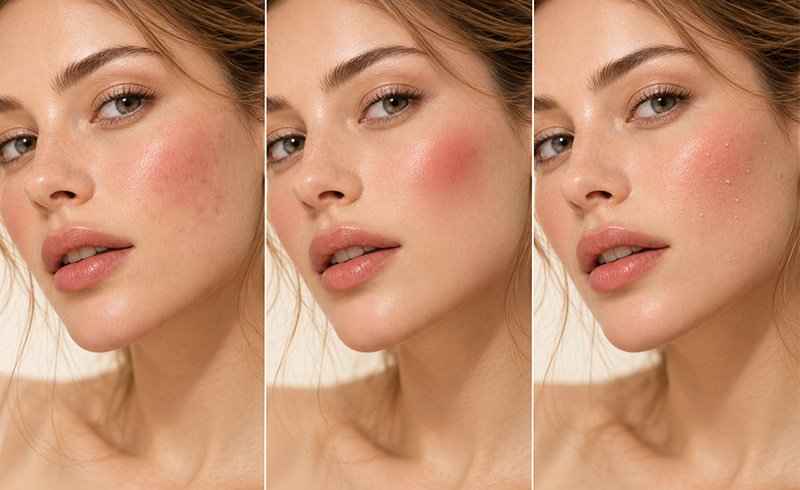
A Base That Still Moves Easily
Foundation that shifts readily under a tool is vulnerable to further disturbance when you add cheek color. Siân Richards London’s guidance on foundation lifting identifies an unsettled base as one possible contributor.
This makes the condition of the surface more useful than a universal waiting time. A luminous finish alone does not establish whether the makeup is ready for another layer. Instead, watch whether a light application pass leaves the coverage in place or visibly moves it.
Pressure, Dragging, and Repeated Blending
Technique is another factor worth checking. In its cream blush tutorial, Siân Richards London recommends restrained application and warns that repeated working of the area can lift the base.
Notice when the gap appears. Does it happen during the first contact, or only after you have blended the same area several times? That distinction gives you a more specific next experiment: change the initial placement in the first case, or reduce repeated blending in the second. Neither observation, by itself, establishes a chemical incompatibility.
The Particular Blush-and-Foundation Combination
A blush that works over one foundation may behave differently in another routine. Describing products as “water-based” or “silicone-based” does not, by itself, show whether that combination caused the lifting you observed.
A more useful comparison is practical: keep your foundation routine the same and try a different blush, or keep the blush and change the foundation on another occasion. If you change skincare, primer, foundation, tools, and powder together, you will have little basis for deciding which change helped.
3. How to Apply Cream Blush Without Disrupting Your Foundation
Check the Base Before Adding Color
Look at your foundation before opening the blush. If coverage is already uneven, note that first; otherwise, you may attribute an existing problem to the next product.
Start with a small area of cheek rather than immediately applying color across both sides of the face. Observe the base after the first light pass. If it visibly shifts, pause before adding more blush and reconsider the base application or layering order.
Load the Tool Lightly and Tap on Thin Layers
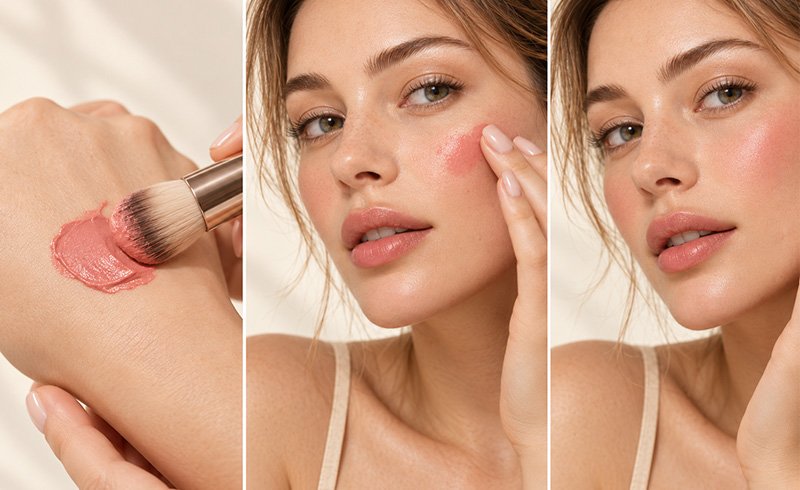
Placing a little blush on a clean palette or the back of your hand gives you a chance to distribute it before it reaches your face. Siân Richards London includes this approach in its application advice.
Choose a method that suits the product’s instructions. For example, Rare Beauty recommends a dense brush or fingertips for its Stay Vulnerable Melting Blush. That is guidance for that particular formula, rather than a rule for every cream blush.
If you are comparing fingers, a brush, and a sponge, keep the blush and base unchanged. Begin with a small pickup. After the first light pass, check both the blush color and the foundation coverage before blending further. Add another thin layer only where you want more intensity.
Blend the Edges, Then Stop
Separate two decisions: whether the color is strong enough and whether the boundary looks soft enough. They do not always require the same action.
If the center already has enough color, focus your next light taps near the edge instead of reworking the whole cheek. Check the result in a mirror from a normal viewing distance before making another pass. This gives each adjustment a clear purpose and helps you avoid repeatedly correcting an area that already looks even.
4. Should Cream Blush Go Before or After Setting Powder?
Applying cream blush before powder is a reasonable starting point when you are troubleshooting. Charlotte Tilbury’s cream blush guide recommends completing cream products before setting powder. However, Rare Beauty states that its Stay Vulnerable Melting Blush can be layered over powder formulas.
These instructions have different scopes. One offers a routine sequence; the other describes how a particular product is intended to work. Neither establishes that every cream blush must behave identically.
If your current combination fails over a powdered cheek, try it before powder on another occasion while keeping the other steps consistent. If the product explicitly supports application over powder, follow its directions and test a small area first. Adding more powder to an already disrupted patch will not replace the missing foundation coverage.
For broader context on the formats, see Doriff’s guide to cream, powder, and liquid blush.
5. What to Do If Your Foundation Has Already Lifted
Stop blending and inspect the area before reaching for more product. A repair attempt should address the visible problem, rather than add another full layer of everything.
- If the color is too strong but coverage is intact, soften it locally. Makeup.com suggests tapping a tiny amount of remaining foundation over patchy blush edges with a sponge or foundation brush. Use this selectively, because it can also reduce the blush color.
- If coverage is missing, try a small local correction. Place a little foundation on a clean tool and gently tap it into the gap, avoiding repeated passes over the surrounding blush. Treat this as a cautious touch-up attempt; it may not restore the original finish.
- Stop if the patch spreads or texture builds up. Removing and redoing that small area may be more practical than continuing to layer products over it.
- Record what happened for the next application. A gap that appeared immediately and one that developed after repeated blending suggest different variables to examine.
The goal is to preserve as much of the surrounding makeup as possible. A small repair that looks acceptable at a normal viewing distance may be preferable to an increasingly heavy attempt at perfection.
6. For Beauty Brands: Evaluate Layering, Not Just the Swatch
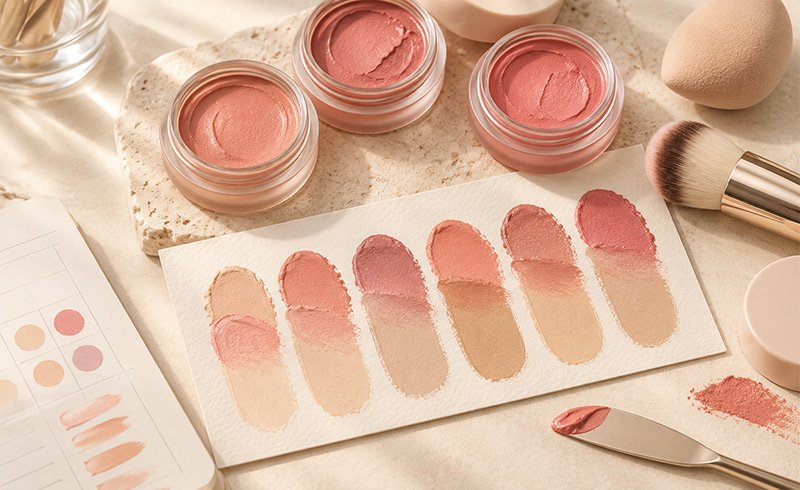
A swatch shows color and spread in one setting. It does not answer how a blush behaves over the complexion products a customer plans to wear.
For a brand developing cream blush, layering deserves its own evaluation alongside shade and finish. The following is a suggested comparison approach, rather than a report of testing performed on Doriff products.
Compare Samples Under Consistent Conditions
Define the intended routine first. A product designed for bare skin poses a different evaluation question from one promoted for use over foundation and powder.
For an initial comparison, keep the foundation, preparation, application tool, lighting, and chosen amount as consistent as practical. Observe the base before blush, after the first application, after edge blending, and after an additional layer. Record visible coverage gaps separately from uneven blush color.
If you later compare tools or powder sequences, change one variable at a time. Photographs taken under consistent conditions can help document appearance, but an informal comparison does not establish compatibility with every foundation or user.
Turn Observations into Useful Product Instructions
Use the observations to make directions more specific. “Blend well” leaves customers to decide how much product to use, which tool to choose, and when to stop. Instructions informed by sample evaluation can address those decisions more clearly.
Keep the scope of any performance statement aligned with the evidence. A successful result with selected foundations does not justify “works with all makeup.” If a brand wants to make a broader layering claim, the evaluation needs to be designed to support that claim.
7. Frequently Asked Questions
Q1:Can Applying Cream Blush Before Foundation Help?
It can be an alternative when you want softer, more diffused color. Revlon’s cream blush guide describes applying blush before foundation for a subtler result and after foundation for more visible color.
This approach is often called underpainting. It changes the order of the layers, but the foundation still needs to be applied without excessively disturbing the color beneath. Greater foundation coverage may also conceal more of the blush, so it is not a guaranteed solution for every routine.
Q2:Should You Replace Your Blush If It Keeps Lifting Your Base?
Consider changing the combination after a controlled attempt to simplify application. Compare a smaller amount, a lighter technique, or another suitable tool separately, rather than changing everything at once.
If the blush repeatedly fails with your preferred foundation while another blush works under similar conditions, choosing the better-performing combination is reasonable. That comparison helps you make a personal choice; it does not prove that the original blush is defective.
8. Keep the Base Intact with Small, Targeted Changes
When cream blush lifts foundation, start by identifying what has actually changed: coverage, cheek color, or surface texture. Then make a targeted adjustment and observe the result before adding another variable.
You do not need to rebuild your entire routine immediately. Begin with a small application area, follow the product’s directions, and keep the combination that gives you the most consistent result.
For beauty brands developing a blush, include the intended base products and application method in the brief. Explore Doriff’s custom formulation development to discuss the texture, finish, and layering experience you want to evaluate.