

The peach blush trend enhances the complexion by infusing natural solar warmth, but selecting the right shade requires decoding your sub-surface skin tones. For warm undertones (golden, honey, or yellow base), opt for golden apricot, ripe nectar, and sun-kissed amber peach blushes that harmonize with natural carotene tones without turning muddy. For olive undertones (green, neutral-yellow, or greyish-cool cast), avoid pastel peaches packed with white titanium dioxide bases, which cast an ashy, chalky film. Instead, choose rosy pink-peach, muted guava, or burnt terracotta peach blushes with brown or neutral-pink grounding pigments that counteract green undertones while providing a healthy, radiant flush.
1. The 2026 Peach Blush Revival: Why It Dominates Beauty Trends
Blush trends have shifted from monochromatic “clean girl” pinks and moody 90s mauves toward the luminous, vitality-boosting world of peach and pink-peach hues. Often described as the “golden hour filter in a compact,” peach blushes mimic the natural vascular flush of healthy, energized skin.
Unlike cool bubblegum pinks—which can sit unnaturally on the surface of yellow-dominant complexions—peach bridges the gap between bronze warmth and rosy flush. However, peach is not a singular hue; it is a complex chromatic spectrum spanning from soft pastel melon and golden apricot to rich burnt nectar and rosy pink-peach. Understanding how these pigments reflect light against warm and olive canvas tones is the key to mastering the look.
[Pure Yellow / Golden Base] <---> [Apricot / Nectar] <---> [True Peach] <---> [Pink-Peach / Guava] <---> [Terracotta / Spiced Peach]2. Color Theory: How Peach Pigments Interact with Warm vs. Olive Skin
Choosing the right blush is rooted in subtractive color theory. The appearance of blush is the net result of light passing through the translucent pigment layer, reflecting off melanin and vascular structures, and bouncing back to the observer.
(1)Warm Undertones (Golden, Honey, Peachy)
- Biological Canvas: Dominated by pheomelanin (yellow-red pigment) and golden carotene in the dermal layer.
- The Reaction: Warm skin readily absorbs and harmonizes with yellow, orange, and gold micro-pigments.
- The Goal: Amplify radiance without veering into hyper-saturated orange or clownish neon. Golden nectars and sunny apricots create a seamless, believable warmth.
(2)Olive Undertones (Greenish, Grey-Neutral, Cool/Warm Olive)
- Biological Canvas: A unique matrix of yellow melanin combined with blue-tinted subcutaneous veins, producing a visible green cast ranging from pale fair olive to deep bronze-olive.
- The Reaction:
- The Chalk Trap: Light pastel peaches formulated with high concentrations of Titanium Dioxide (TiO2TiO2) scatter white light, creating an unnatural grey or chalky halo over green tones.
- The Muddy Clash: Overly pure yellow-apricot blushes accentuate the green pigment, making the skin appear sallow or jaundiced.
- The Solution: Olive complexions require pink-peach, muted guava, or burnt terracotta-peach with balancing red, rose, or brown undertones that neutralize green while introducing a fresh, dimensional flush.
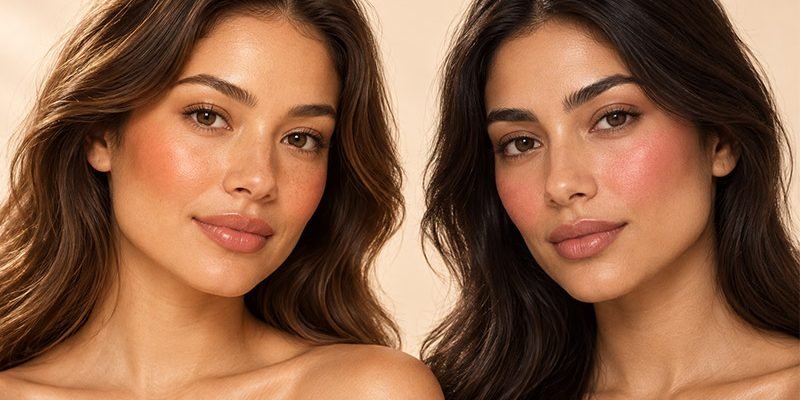
3. Top 6 Hero Shade Profiles: Formula, Finish & Swatch Analysis
To eliminate guesswork, here is an in-depth breakdown of the six core peach shade profiles that consistently deliver flattering, professional results for warm and olive complexions.
(1)Muted Rosy Pink-Peach (The Universal Olive Corrector)
- Chromatic Profile: 60% Soft Petal Pink, 30% Warm Peach, 10% Neutral Brown Base.
- Best For: Fair-to-Medium Olive, Muted Olive, Warm-Neutral Skin.
- Why It Works: The rose-pink component neutralizes the green undertone of olive skin, while the subtle peach ribbon maintains a sunny, daytime glow. The presence of brown pigment grounds the shade, preventing neon flashiness under harsh LED lighting.
- Recommended Texture: Radiant liquid or satin melting cream.
(2)Golden Nectar & Luminous Apricot (The Golden Hour Glow)
- Chromatic Profile: 50% Vibrant Apricot, 35% Warm Yellow-Gold Mica, 15% Soft Peach.
- Best For: Light-to-Medium Warm Golden and Honey Undertones.
- Why It Works: It integrates with the natural yellow-gold carotene in warm skin. Instead of sitting on top of the foundation, it reads as a lit-from-within flush.
- Recommended Texture: Baked powder with ultra-fine gold micro-pearls or serum liquid blush.
(3)Spiced Terracotta Peach (The Medium-to-Deep Olive Sculptor)
- Chromatic Profile: 45% Rich Burnt Sienna, 35% Warm Papaya Peach, 20% Deep Amber.
- Best For: Tan-to-Deep Olive and Rich Warm Bronze Complexions.
- Why It Works: High pigment depth combined with red-brown undertones provides both color correction and subtle structural contouring in a single sweep. It cuts through deep olive undertones without turning dull or muddy.
- Recommended Texture: Matte or semi-matte velvety pressed powder.
(4)Fresh Guava / Melon Peach (The Vibrant Youthful Flush)
- Chromatic Profile: 50% Coral Pink, 40% Juicy Melon Peach, 10% Translucent White Pearl.
- Best For: Fair-to-Light Warm Undertones and Bright Spring Color Types.
- Why It Works: Guava delivers a playful, energizing pop that perks up tired skin without the harshness of pure fuchsia or the sallow risk of pure yellow-peach.
- Recommended Texture: Dewy cream stick or sheer jelly tint.
(5)Toasted Amber Peach (The Natural Sun-Kissed Minimalist)
- Chromatic Profile: 50% Soft Amber-Ochre, 30% Golden Peach, 20% Muted Nude.
- Best For: Warm Olive, Golden Medium, and Neutral-Warm Skin seeking a “no-makeup makeup” finish.
- Why It Works: Acts as a hybrid blush-bronzer (“blonzer”). It enhances natural bone structure while bathing high cheekbones in warm, natural color.
- Recommended Texture: Sheer luminous gel or finely milled talc-free powder.
(6)Papaya Spice & Burnt Peach (The High-Pigment Statement)
- Chromatic Profile: 55% Deep Orange-Papaya, 35% Warm Crimson, 10% Golden Copper.
- Best For: Rich, Deep Warm and Olive Complexions.
- Why It Works: Formulated with high-potency micronized pigments that do not look ashen on deep skin depths. It pops vibrantly against rich melanin.
- Recommended Texture: High-pigment liquid dropper or richly pigmented cream pot.
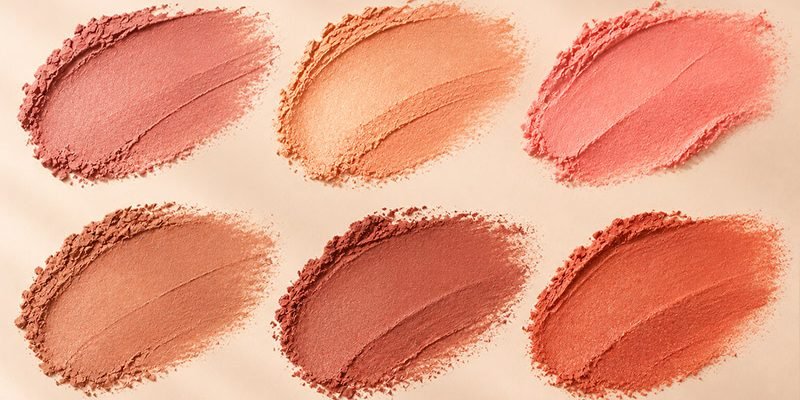
4. Master Undertone & Shade Comparison Matrix
The table below provides a quick, structured roadmap to matching skin depth and undertone with the ideal shade and formulation.
| Shade Family | Color Base & Pigment Dominance | Ideal Undertone | Best Skin Depth | Recommended Finish | Common Pitfall Avoided |
|---|---|---|---|---|---|
| Muted Rosy Pink-Peach | Pink + Rose + Neutral Beige | Neutral-to-Cool Olive, Muted Olive | Fair to Tan | Satin / Dewy Liquid | Prevents the grey/ashy cast of chalky pastel peaches |
| Golden Apricot | Yellow-Orange + Gold Micro-Pearl | Warm Golden, Honey | Light to Medium | Radiant / Luminous Baked | Eliminates flat, unnatural pink contrasts |
| Spiced Terracotta | Burnt Orange + Sienna Brown | Warm Olive, Deep Olive | Medium to Deep | Velvet Matte / Semi-Matte | Avoids disappearing into deeper skin or looking muddy |
| Fresh Guava Melon | Coral + Watermelon Pink + Peach | Light Warm, Neutral Warm | Fair to Light-Medium | Glossy / Glazed Dewy | Prevents sallow, tired skin appearances |
| Toasted Amber | Ochre + Warm Peach + Nude | Warm Olive, Golden Neutral | Medium to Tan-Deep | Sheer Tint / Satin Balm | Replaces muddy bronzers with a fresh, lifelike glow |
| Papaya Spice | Saturated Orange-Red + Copper | Rich Warm, Rich Olive | Deep to Rich-Deep | High-Pigment Liquid | Prevents white flashback on deep melanin |
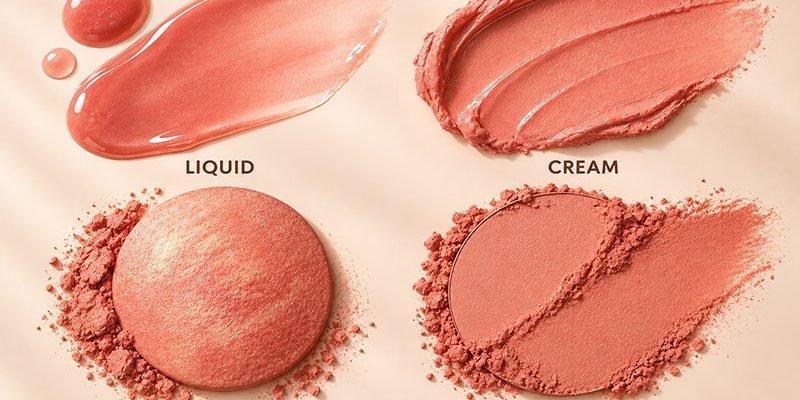
5. Formula Showdown: Liquid vs. Cream vs. Baked vs. Pressed Powder
Finding the right shade is only half the equation; your skin type and environment dictate the ideal delivery mechanism.
                 [ SKIN TYPE SELECTION MATRIX ]

     DRY / TEXTURED ------------------> Cream Stick / Radiant Liquid
     COMBINATION / NORMAL -----------> Hybrid Baked / Satin Cream
     OILY / HUMID CLIMATES ----------> Finely Milled Pressed Powder / Velvet Tint
(1)Liquid Blush (The “Melted-In” Optical Transparency)
- Best For: Dry, mature, or textured skin; lovers of the glazed, dewy finish.
- Why It Excels on Olive Skin: Liquid suspensions generally use lighter binders and transparent carrier oils rather than heavy white talc/filler bases, allowing olive complexions to show through without a chalky film.
- Pro Tip: Dot onto the back of the hand first; tap onto the cheek with a damp beauty sponge to prevent disturbing underlying foundation.
(2) Cream Sticks & Melting Balms (The Natural Daytime Flush)
- Best For: Normal-to-dry skin, quick on-the-go application, “no-foundation” makeup days.
- Performance: Emollient bases blend seamlessly into the skin’s lipid barrier, making the boundary between peach pigment and skin undertone completely imperceptible.
(3)Baked Mineral & Luminous Powders (The Multi-Dimensional Glow)
- Best For: Combination skin and evening events where camera flash is present.
- Performance: Baked powders swirl pigment with multidimensional micro-pearls. On warm skin, gold-veined baked powders reflect ambient light, acting as both blush and soft-focus highlighter.
(4)Matte & Velvet Pressed Powders (Long-Wear & Oil Control)
- Best For: Oily skin, humid weather, and long workdays.
- Performance: Offers the highest precision and longevity. Look for formulations using synthetic fluorphlogopite (synthetic mica) instead of heavy talc for cleaner, true-to-pan color payoff.
6. Common Peach Blush Mistakes (And How to Fix Them)
Even the most beautiful blush in the pan can look unflattering if paired incorrectly with skin undertones. Here is how to troubleshoot common mistakes:
Mistake 1: The “Titanium Dioxide Ashiness” on Olive Complexions
- The Problem: The blush looks bright and peachy in the compact, but turns into a dull, chalky, greyish paste once applied to olive skin.
- The Cause: High concentrations of Titanium Dioxide (TiO2TiO2) used as a cheap white opacifier in pastel blushes.
- The Fix: Inspect the ingredient list or swatch for opacity. If the swatch leaves a stark white cast when blended out, avoid it. Choose translucent gel-creams or shades with a clear, red/brown-pigmented base.
Mistake 2: The “Neon Oompa Loompa” Effect on Warm Skin
- The Problem: The peach blush looks radioactive or overly fluorescent orange in natural sunlight.
- The Cause: Selecting high-chroma synthetic neon orange dyes without sufficient neutral or pink undertone anchors.
- The Fix: Tone down the chroma. Choose muted apricots, toasted peaches, or pink-peach hybrids that incorporate earth pigments (iron oxides) to mirror organic skin tones.
Mistake 3: Over-Powdering Over Cream Peach Blushes
- The Problem: Setting a radiant peach cream with a heavy, cool translucent powder dulls the warmth and causes patchiness.
- The Fix: Set the area with a micro-fine warm translucent powder or use the “underpainting” technique—apply your peach cream blush before sheer foundation or tinted moisturizer.
7. Pro Makeup Artist Application Techniques
To elevate your blush game from basic application to sculpted editorial artistry, follow these industry techniques:
Technique A: The “Sunset Gradient” Layering Method
- Ideal For: Medium to Tan Warm & Olive Skin.
- How To Do It:
- Apply a deeper burnt terracotta peach on the outer cheekbones toward the temple for warmth and structure.
- Place a vibrant rosy pink-peach directly on the apples of the cheeks.
- Buff the transition zone with a clean stippling brush. This creates a dimensional sunset gradient that lifts the midface.
Technique B: The “W-Blush” Sun-Kissed Technique
- Ideal For: Achieving the effortless post-vacation glow.
- How To Do It:
- Using a fluffy angled brush with a sheer golden-apricot powder, sweep color from the high point of one cheekbone, across the bridge of the nose, and onto the opposite cheekbone in a soft “W” pattern.
- This mimics natural UV melanin activation across the high planes of the face.
       ( Cheekbone ) \         / ( Nose Bridge ) \         / ( Cheekbone )
                      \_______/                   \_______/
                             [ The "W" Sweep Path ]
8. FAQ
Q1: Is peach blush better than pink blush for olive skin?
Generally, pink-peach hybrids are superior to both pure pastel baby pink and pure yellow-orange for olive skin. Pure cool pinks can clash with the green-yellow cast of olive tones, while pure yellow-peach can emphasize sallow hues. A balanced pink-peach (or muted guava) provides the corrective power of rose with the brightening warmth of peach.
Q2: How do I know if I have warm or olive undertones?
Check your skin against white and cream fabrics in natural daylight:
- Warm Undertones: Golden, honey, or creamy yellow reflection; veins appear olive-green; gold jewelry looks significantly more harmonious than silver.
- Olive Undertones: Skin shows a subtle greenish, cool-golden, or ashy-neutral tint; silver and gold jewelry may both work, but pure pastel clothing washes you out; foundation shades often look too pink or too orange.
Q3: Can fair olive skin wear peach blush without looking yellow?
Yes, provided you choose a muted rosy-peach or sheer melon tint. Fair olive complexions should avoid opaque, high-titanium-dioxide pastel apricots and instead reach for translucent formulas with pink or neutral undertones that enhance vitality without adding a yellow cast.
Q4: Which blush finish is best for textured or acne-prone skin?
A satin or finely milled soft-matte powder. High-shimmer or chunky glitter finishes emphasize pores, bumps, and textural irregularities by catching directional light. Satin formulas impart a healthy sheen using micro-refined optical pearls that diffuse light smoothly.
Q5: Can I wear peach blush if I have rosacea or facial redness?
Yes. In fact, a muted toasted peach or warm apricot can camouflage redness more effectively than pink blushes, which tend to accentuate flare-ups. Pair with a green color-correcting primer on active red zones before applying your peach blush.
9. Final Verdict & Buyer’s Checklist
The peach blush trend is a timeless complexion booster when tailored to your skin’s unique chromatic undertones. Keep this quick checklist in mind when shopping:
- Identify Your True Depth:Fair, Light-Medium, Tan, or Deep.
- Check the Undertone Anchor:
- Warm Skin: Lean into Apricot, Nectar, and Papaya.
- Olive Skin: Lean into Rosy Pink-Peach, Guava, and Terracotta.
- Inspect Opacity & Base Pigments:Avoid highTiO2TiO2chalky pastels for olive tones.
- Pick the Formula for Your Lifestyle:Dewy liquids for glow; baked/pressed powders for all-day longevity.
Ready to find your signature shade? Explore your undertone match, experiment with hybrid formulas, and bring effortless, sun-kissed vitality to your everyday routine.