

A lip gloss can look beautiful in a swatch yet feel distracting once you start talking, pressing your lips together, or touching it up. If you enjoy glossy lips but dislike that sticky pull, choosing another product involves more than looking for “non-sticky” on the tube.
Start by checking how a small amount feels and spreads, then decide whether that comfortable amount gives you the shine and color you want. The applicator, changes during wear, and your usual lip combinations also deserve attention. These seven checks offer a practical way to compare products according to your preferences, rather than treating one label or ingredient as a guarantee.
1. Check for Tacky Pull When Your Lips Separate
For this comparison, think of tackiness as the pulling or sticking sensation you notice when your lips touch and separate. This is different from slipperiness, which describes how readily the product moves, and from the feeling of having a substantial layer on your lips.
If you can try a product, apply a small amount, spread it evenly, and let your lips close and separate naturally. Notice whether there is a slight attachment you barely register or a stronger pull that makes you keep adjusting your lips. Neither a promotional description nor a glossy photograph can tell you exactly how comfortable that sensation will be for you.
A hand swatch remains useful for checking color and appearance, but it cannot reproduce the movement and contact of your lips. Use it as one part of your assessment, and keep your own tolerance in mind: a little grip may feel acceptable to one person and distracting to another.
2. Notice the Weight of a Thin Layer
A gloss that produces little tacky pull can still feel substantial. You might describe it as cushiony, oily, thick, or simply too noticeable. Separating these impressions helps you understand what you actually dislike instead of putting every uncomfortable texture under the word “sticky.”
Begin with an amount you would realistically wear during the day. Ask whether you can leave it alone comfortably or immediately want to press your lips together repeatedly, wipe the edges, or remove some product. If taking off the excess improves the experience, the original application may have exceeded your preferred amount.
Also consider whether that smaller amount still delivers a useful finish. A formula that feels pleasant only when almost completely wiped away may not suit the look you want. The goal is a balance between feel and appearance that you can maintain without constant adjustment.
3. Assess How Evenly It Spreads
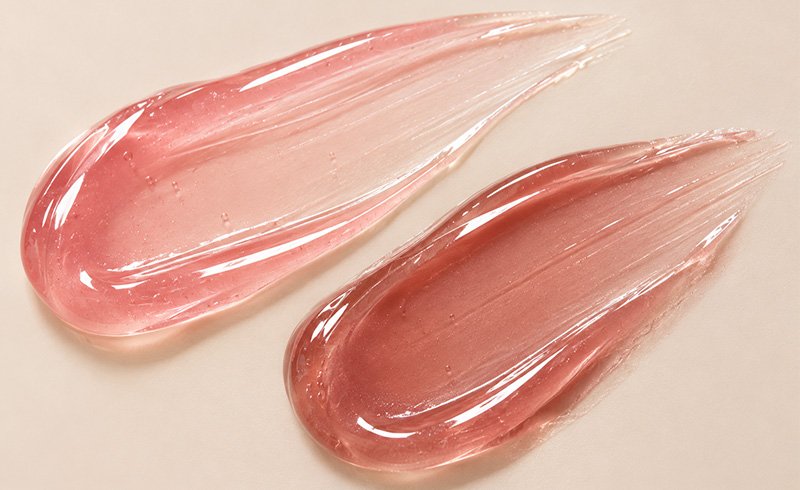
Spreadability concerns how readily the gloss forms an even layer. Watch whether it moves across the lips with manageable strokes or leaves areas that need repeated correction. For a tinted gloss, check whether adding color to a thin area creates a thicker patch beside it.
For example, imagine comparing two similar shades. One reaches an even finish with a small application; the other needs several passes to correct streaks. Even if both initially feel comfortable, assess the second one again at the amount required for an acceptable result.
Keep the condition of your lips and the application method in view. Unevenness during one application does not establish that the formula alone is responsible. When possible, compare products on separate occasions under similar conditions, rather than judging one on a comfortable day and another when your lips feel unusually dry.
4. Check the Shine and Color at Your Preferred Amount
Once you know what amount feels comfortable, examine the finish it creates. Look separately at reflected shine, color coverage, and how much of your natural lip color remains visible. A transparent gloss and an opaque gloss serve different preferences, even when both carry a non-sticky description.
A sheer pink, for instance, may give you the reflective finish you want with little visible coverage. If you expect it to hide your natural lip color, you may keep adding layers to achieve something the product was not designed to deliver. The resulting feel should be assessed at that heavier application, not only at the first light swipe.
Compare finishes in similar lighting, since lighting changes how shine appears. Decide whether you want a clear sheen, a noticeable tint, or fuller color coverage before judging the product. This makes your choice more precise than searching for maximum shine, maximum pigment, and minimum weight without considering how you intend to wear it.
5. Check How Much Product the Applicator Delivers
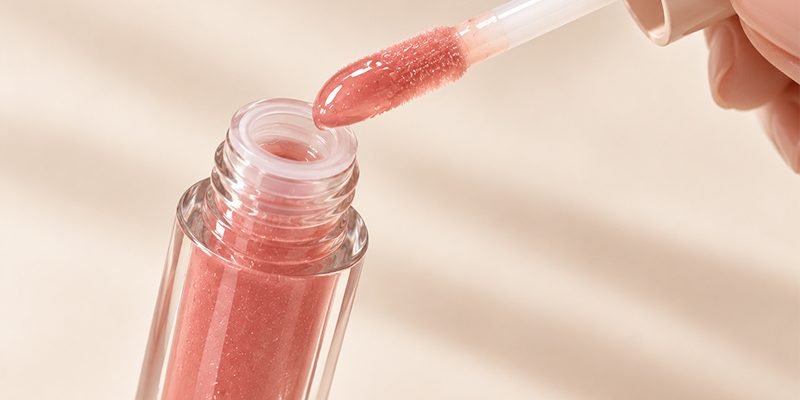
The amount you apply begins with what comes out of the tube. In a wand package, the applicator and the wiper—the insert at the bottle opening—work together to influence product pickup. Packaging specialist GEKA explains that a cosmetic wiper controls the product load on the applicator. Its role makes the packaging relevant to your experience, alongside the formula itself.
During normal use, notice whether the wand gives you an amount you can distribute easily. Do you routinely need to scrape away a large excess? Does product gather around the corners of your mouth because you deposited more than you intended? These observations help identify whether controlling the dose is part of the difficulty.
Avoid choosing by applicator size alone. A larger applicator does not automatically mean an excessive application, and a small one does not guarantee precision. Judge how the complete product behaves in your hands, including whether it lets you add a little more without flooding an area.
6. Recheck Comfort as the Gloss Wears
Your first impression describes one moment. Return to the product later in your normal routine and assess the feel again, while noting whether you have been talking, drinking, eating, or adding other products.
Keep the observations separate. The shine might fade while some color remains; the edges might become less tidy even though the central layer still feels comfortable. These outcomes tell you different things. Remaining color is not proof that the original glossy finish has lasted.
A non-sticky description addresses feel; it does not, by itself, establish transfer resistance or tell you how often you will want to refresh the product. Choose according to the combination you value: perhaps comfortable shine with occasional touch-ups, or more persistent color with a different feel. Record what happens rather than assuming that more grip always means longer wear.
7. Test Touch-Ups and Your Usual Lip Combinations
After assessing the gloss on its own, try it in the combinations you actually use. That might mean wearing it over a lip liner, adding it to lipstick, or applying it after your usual lip care. Change one part of the combination at a time so the result is easier to interpret.
When touching up, look at what is already on your lips before adding another layer. Check whether a small addition restores the finish evenly or leaves thicker areas and uneven color. This tells you whether the product fits the way you normally maintain your makeup.
A gloss that works well alone may feel different over a particular lipstick or balm. If you dislike the combination, compare it with the gloss alone before rejecting the product altogether. If your preferred routine consistently requires more adjustment than you want, another formula or product category may suit you better. Doriff’s guide to lip gloss, lipstick, and liquid lipstick offers a broader comparison of finishes and application needs.
For Brands: Turn These Checks into a Sample Evaluation Brief
For a beauty brand, “comfortable and non-sticky” is a useful starting intention, but it leaves room for different interpretations. A clearer brief explains the desired feel, the finished appearance, and the conditions under which samples will be compared.
Define the Desired Feel and Finish
Describe the attributes separately: tacky pull, perceived weight, spreadability, shine, color coverage, and touch-up behavior. Identify which matter most to the intended customer and where a compromise is acceptable.
A reference product can make the discussion more concrete. Specify what you like about it and what you want to change—for example, its sheer finish but not its strong coating sensation. A reference supports communication; it does not establish that another formula will reproduce every aspect of its performance.
Compare Samples Under Consistent Conditions
Identify each sample by version and shade, and record how it was applied. For comparisons focused on the formula, keep the application method and amount as consistent as practical. Then assess the intended package separately before evaluating the formula and package together.
The following worksheet is a suggested recording framework, not a validated scoring system:
| Attribute | Observation conditions | Feedback to record | Question to resolve |
|---|---|---|---|
| Tacky pull and weight | Similar application amount and lip preparation | Pull on separation; awareness of the layer | Which sensation needs adjustment? |
| Spread and finish | Same application method and similar lighting | Evenness, shine, and color coverage | Does the preferred amount deliver the target look? |
| Product pickup | Intended wand, wiper, and formula together | Excess removal and control of application | Is the dispensing system appropriate? |
| Wear and touch-ups | Recorded activities and observation points | Changes in feel, appearance, and reapplication | Does it fit the intended routine? |
Research also illustrates why sensory attributes deserve separate attention. In a 2018 study by Rafferty and colleagues, researchers prepared 12 model lipstick formulations varying the emollient and used a nine-person panel to assess spreadability, stickiness, opacity, and gloss. Laboratory measurements were compared with the panel results. The published abstract reports relationships within that study; it does not establish a universal test for lip gloss or validate a particular Doriff product.
Match Claims to the Evidence Available
Keep preference feedback distinct from substantiation for a product claim. Comments such as “comfortable in a thin layer” describe an evaluator’s experience under particular conditions. They do not, by themselves, demonstrate transfer resistance, a specified wear duration, or suitability for every user.
Agree on what evidence is needed for the intended claims and market. Sensory comparisons also serve a different purpose from stability, safety, packaging compatibility, and regulatory assessments. Passing one type of evaluation should not be presented as passing the others.
Frequently Asked Questions
Can an ingredient list tell me whether a gloss will feel sticky?
An ingredient list identifies ingredients, but it does not provide a complete prediction of the finished product’s feel. The presence of a particular oil, polymer, or moisturizing ingredient is not enough to classify the whole formula as sticky or non-sticky. Use the list alongside product information and specific feedback about application and wear.
Is lip oil always less sticky than lip gloss?
No. The product name alone does not establish how it will feel. A lip oil may suit your preference for slip, while a gloss may offer a comfortable finish too. Compare the actual products for tacky pull, weight, and the appearance you want rather than treating the category as a guarantee.
How can I choose if I cannot try the gloss first?
Look for descriptions and reviews that discuss specific behavior: whether a thin layer feels heavy, whether the color needs building, and what happens during touch-ups. Swatches help with appearance, but photographs cannot establish comfort. Check whether samples, smaller sizes, or suitable return options are available, and accept that an online choice retains some uncertainty.
Choose the Gloss That Fits Your Everyday Routine
Choosing a non-sticky lip gloss becomes easier when you assess comfort at the amount needed for your preferred finish. Start with tacky pull, weight, and spread, then check the applicator, changes during wear, and how the product handles your usual combinations and touch-ups.
Your best match is the product whose feel and upkeep fit your priorities. For brands developing a gloss, the same observations can become a clearer sample brief. Explore Doriff’s custom formulation options to discuss the texture, finish, and sample requirements for your project.