


A cohesive monochromatic makeup look is achieved by pairing eyeshadow and blush within the same color family and undertone temperature (warm, cool, or neutral) while varying depth (value) and finish (matte vs. radiant) to create dimension. To prevent a flat, one-dimensional appearance, apply the lighter, sheerer formulation across the larger surface area (cheeks) and anchor the look with concentrated saturation or depth on the focal area (eyes). Matching binder textures (e.g., cream-to-cream or powder-to-powder) ensures seamless pigment transition across distinct facial skin zones.
1. The Science of Chromatic Harmony: Why Monochrome Elevates Facial Architecture
Monochromatic makeup is a dominant aesthetic across US beauty culture—from the viral TikTok “Latte Makeup” to editorial “Sunset Blush” aesthetics. Grounded in optical color science, when the orbital area and zygomatic arch share an identical color temperature, the human brain perceives immediate balance, emphasizing bone structure rather than competing cosmetics.
Hue, Value, and Chroma in Facial Dimension
- Hue (Color Family): Unifying the hue angle eliminates color clash, allowing natural facial planes and lighting to shape your features.
- Value (Lightness vs. Darkness): Uniform value creates a flat, mask-like effect. Dimensional monochrome relies on a strategic value gradient: light-to-mid tones across the cheekbone paired with deeper contouring tones in the eye crease.
- Chroma (Saturation Control): High-chroma blush combined with high-chroma eyeshadow can overwhelm everyday looks. Professional application dilutes cheek chroma (via translucent mica/talc bases) while concentrating rich chroma on the eyelid center.
2. US Market Trend Archetypes: Curated Duos for Every Complexion
Matching duos to US skin tone diversity (Fitzpatrick Scale I–VI) requires calibrating undertone temperatures with trending color stories.
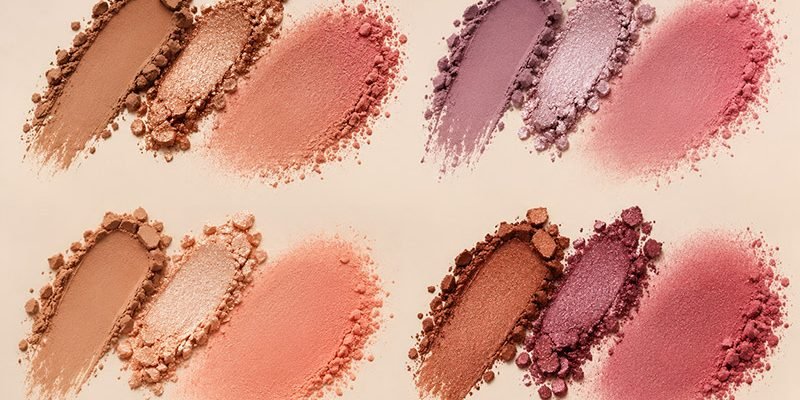
| Complexion & Undertone | Trending US Aesthetic | Eyeshadow Anchor Shade | Complementary Blush Shade | Recommended Finish Duo |
|---|---|---|---|---|
| Warm Golden / Olive (Fitzpatrick III–IV) | Warm Terracotta / Latte Glow | Warm Ochre Base + Metallic Bronze | Burnt Spiced Amber / Warm Terracotta | Velvet Cheek + Satin Foil Lid |
| Cool Pink / Pale (Fitzpatrick I–II) | Dusty Mauve / Cold Girl Pink | Cool Ash Plum + Silver-Lilac Sparkle | Soft Heather Petal / Muted Mauve | Hydrated Dewy Cheek + Velvet Lid |
| Neutral / Beige (Fitzpatrick II–III) | Sunlit Peach / Clean Girl Apricot | Toasted Almond + Champagne Shimmer | Sunlit Apricot / Peach Nectar | Dewy Balm Cheek + Soft-Focus Matte Lid |
| Deep / Rich Espresso (Fitzpatrick V–VI) | Crimson Copper / Sunset Heat | Molten Copper + Deep Bordeaux Shimmer | Vibrant Mulberry / Spiced Fig | Radiant Luminous Cheek + Micro-Glitter Lid |
3. Formulation & Texture Synergy: Cream, Powder, and Liquid Interplay
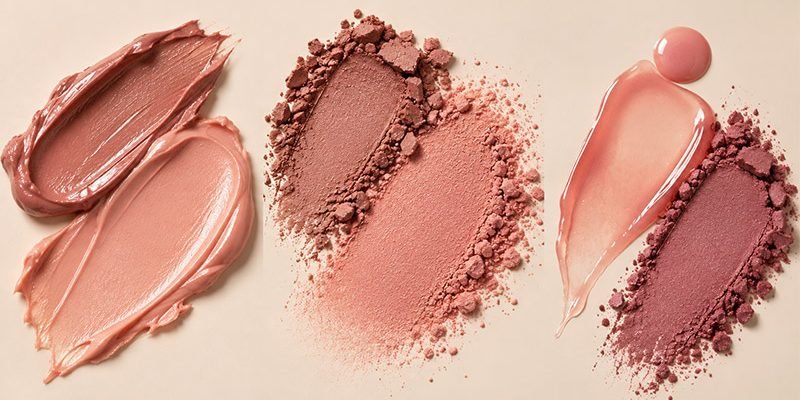
(1)Cream-on-Cream (The Modern Dewy Aesthetic)
- Formulation Backbone: High ester/lipid content featuring plant-derived squalane and microcrystalline wax.
- Application Rule: Warm between fingers to melt binder viscosity. Tap blush high on the cheekbones, bringing residual pigment across the eyelid crease.
Longevity Anchor: Dust translucent spherical silica exclusively over the orbital crease and T-zone to lock down wear without muting cheek radiance.
(2)Powder-on-Powder (The Blurring Velvet Finish)
- Formulation Backbone: Micronized pigments milled with synthetic fluorphlogopite and light-scattering untreated/treated talc.
- Optical Mechanism: Diffuses direct light (TiO2TiO2 refraction), blurring enlarged pores and surface texture.
- Application Rule: Prep with a lightweight translucent setting veil before blush application to prevent patchiness over foundation moisture.
(3)The Hybrid Tint Method: Liquid Stain + Pressed Powder
- Mechanism: High-adhesion water-based cheek stain overlaid with high-pigment pressed eyeshadow.
- Benefit: Maximum transfer-resistance during humid conditions while maintaining gradient precision on delicate eyelids.
4. Step-by-Step US Editorial Protocol: Cheeks-Anchored Application
EXECUTION ROADMAP: CHEEKS-ANCHORED MONOCHROME
[1. Complexion Base] ──> [2. Blush Gradient (Anchor)] ──> [3. Eye Wash Transition] ──> [4. Accent & Tightlining] ──> [5. Final Tone Calibration]
Phase 1: Establish the Primary Tone Anchor (Cheeks First)
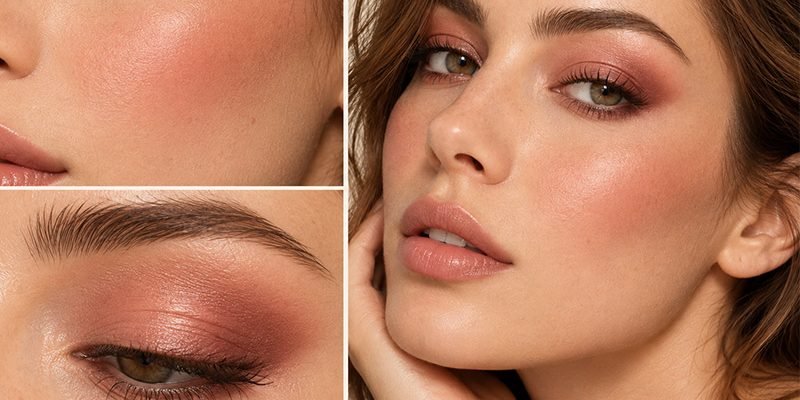
- Placement: Using an angled natural-hair or dense duo-fiber synthetic brush, buff your blush from the apple of the cheek up along the zygomatic arch toward the hairline.
- Diffusion: Keep density focused on the outer third of the cheek, feathering inward to less than 20% opacity near the center of the face.
Phase 2: Mirroring the Hue on Orbital Architecture
- Transition Wash: Sweep theexact same blush shade through the entire crease using a fluffy tapered blending brush. This creates an identical chrominance base.
- Value Accentuation: Apply the paired eyeshadow—sharing the same undertone but 2–3 values deeper—into the outer corner (Outer V).
- Lid Center Highlight: Apply a complementary shimmer (champagne for peach; rose-gold for mauve; copper for terracotta) over the center lid.
Phase 3: The Unifying Tie-In
- Run the residual blush pigment along the lower lash line using a flat pencil brush to seamlessly tie the eyes to the cheek plane.
- Pro Tip: Tap leftover pigment over the bridge of the nose for an authentic, sun-kissed US coastal finish.
5. FAQ
Q1: Can I use my powder blush as an eyeshadow (and vice versa)?
Yes, provided the blush is formulated without eye-restricted lake pigments (like certain D&C Red dyes). When using eyeshadow as blush, sheer it out on the back of your hand with translucent powder first, as eyeshadow has a higher pigment load that can grab onto cheek foundation.
Q2: How do I select the right lip shade to complement a monochromatic duo?
Follow the Two-Thirds Saturation Rule. Match the lip undertone precisely, but choose a formulation that is either sheerer (a dewy tinted lip oil) or one level deeper in value (a defined lip liner with satin lipstick) to maintain facial contrast.
Q3: What is the best monochromatic duo for mature skin?
Squalane-infused cream duos in soft peach, warm rosewood, or almond nude. Avoid chunky glitters and drying ultra-matte powders in favor of micro-fine optical blurring silica.
6. CTA
Are you an independent beauty brand, salon group, or influencer looking to launch custom Eyeshadow & Blush Monochrome Duos tailored for the US and global markets?
┌─────────────   ─────────────────────┐
│        🌟 PRIVATE LABEL & OEM/ODM FORMULATION SERVICES 🌟             │
│                                                                        │
│  ✓ Custom Color Matching: Tailored undertones for all skin tones       │
│  ✓ FDA & EU Compliant: Clean, vegan, eye-safe multi-use formulations   │
│  ✓ Hybrid Textures: Velvet powder, dewy cream-to-powder, serum tints   │
│  ✓ Low MOQ Production: Agile batch runs starting at just 500 units     │
│  ✓ Fast-Track Prototyping: Receive pre-production sample duos in 7 days │
└─────────────────────────────── ─────┘
👉 Ready to formulate your signature collection?
- [Request Free Sample Kits]: Test our trending Warm Terracotta and Dusty Mauve formulation benchmarks.
- [Schedule a Formula Consultation]: Speak directly with our cosmetic chemists to customize finishes, compact packaging, and private label shade ranges.